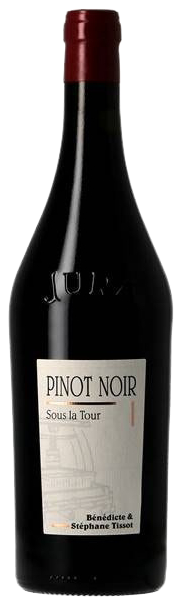
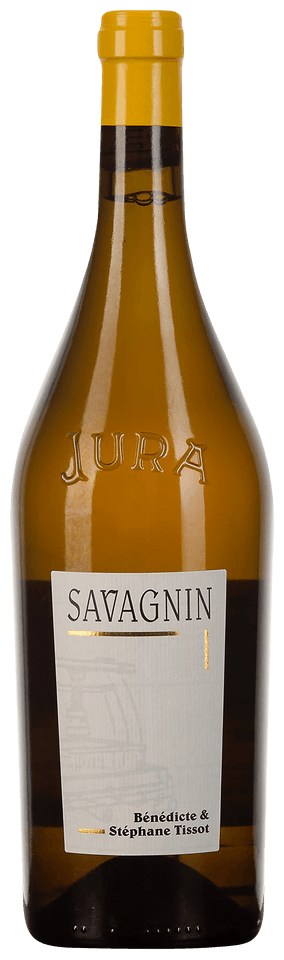
Domaine André et Mireille Tissot
FAMILY TIES WOVEN AROUND THE VINE
In the Tissot family, let's first mention the grandfather, for it is to him that we owe what the Tissot estate is today. Indeed, he gave each of his four sons a vineyard: throughout France, the Tissots began making wine. In 1962,André Tissotsettles down with his wife,Mireille, north of Arbois, in the heart of the Jura, atMontigny-lès-ArsuresHe buys several sharecropping and rental properties in order to expand his estate, until he reaches16 hectaresof vines. To ensure the distinction with the productions of his brothers, André decided to put his wife's first name on the labels of the bottles: a first in viticulture, already proof of the audacity of the family.
After havingjourneyin North Africa and Australia in particular, and completed his viticulture studies in Beaune.Stéphane Tissot, son of Mireille and André, took over the estate in 1980. Aware of the richness offered by the Jura terroir, he began to think about the best way to express it: this is how he started thetransition to biodynamicsin1999.In 2004 he obtained theDemeter certification: first victory in promoting his region.
Terroir and Wines
A PATCHWORK OF FLOORS
It was the movements of the ground, from the glacial air, that formed aJura landscape(made up of valleys and hills) atypical in its composition. The producer speaks passionately about the unique character of his region and its terroir. While the Jura shares limestone (30%) with Burgundy, it distinguishes itself by the presence of clay (70%) and marl, which are much older.
Building on this situation, Stéphane Tissot developed apartial approachin its winemaking process in order to extract all the richness of its grape varieties and the secrets of its soils (now spread over 50 hectares).
Biodynamics
A COMPLEX EXPERTISE THROUGHOUT
Very involved in thebiodiversityStéphane Tissot has cultivated biodynamically since the beginning, because there is no better way to express all the subtleties of his terroir. Pesticides are abandoned in favor of copper treatments; the family has invested in ahorseto maintain the soil; and the harvest is done manually. To compensate for the lack of classification in his region, Stéphane strives to work on the quality of his wines and the expression of this terroir that is so dear to him.
Five grape varieties are cultivated on these Jura lands:
- Pinot Noir(44%),
- trousseau(32%)
- Andpoulsard(24%)
- for the reds, and
- chardonnay(68%)
- savagnin(32%),
- for the white wines. These vines react perfectly to the soils and each expresses different characteristics (while Poulsard thrives in clay, Chardonnay tends to reduce). The winemaker has chosen to work on density and acidity in order to minimize intervention during vinification. The latter takes place inbarrelsor evenamphorae(for the reds). Finally, sulfur is used in very small quantities before bottling to ensure the preservation of the wines. At each stage, Mr. Tissot seeks to test his raw materials, to explore new possibilities, and to create cuvées that are sometimes surprising (like his native Crémant). He confides that"Organic wine is a means, not an end; it is necessary to constantly reinvent oneself.".
The Jura region offers a plethora of possibilities for those seeking to find their happiness. These include straw wine (or sweet wine, as the grapes are sometimes pressed later than usual), yellow wine, marc, white wine and red wine.